
Wild Shores and Waddling Thousands: Discovering the Falkland Islands
Penguins, albatross and untouched landscapes await on this 14-night South Atlantic expedition aboard the MS Island Sky — one of the finest small ships afloat.
14 October 2026
Few destinations reward the effort of getting there quite like the Falkland Islands. Scattered across the South Atlantic some 300 miles off the Argentine coast, this archipelago of 420 rocky islands exists in magnificent isolation — a place where rolling peat moorland meets crashing surf, where tussock grass towers overhead, and where the wildlife simply ignores you.
This 14-night expedition with Noble Caledonia ventures deep into the archipelago aboard the MS Island Sky, calling at islands many travellers have barely heard of, let alone visited. It is timed for January, when conditions are at their best and the natural world is in full, glorious swing.
Whether you are encountering the Falklands for the first time or returning after a brief stop en route to Antarctica, this voyage offers something rarer: the chance to truly linger.
What makes this voyage distinctive
Most visitors to the Falklands see Stanley and little else. This expedition takes a very different approach, working methodically through the outer islands of the West Falklands before crossing the Falkland Sound and arriving into Stanley from the wild, rather than the conventional direction. Steeple Jason, New Island, Carcass Island, Keppel Island, Saunders Island — these are not names on the standard tourist circuit. They are remote, largely unspoilt, and extraordinary.
The itinerary is built around what is actually there: wildlife, landscape, and layers of history that range from 18th-century sealing operations to a conflict that defined a generation. That combination of natural spectacle and human story gives the voyage a depth that sets it apart from wildlife cruises alone.
Wildlife on a staggering scale
The Falklands hold some of the most accessible wildlife spectacles on the planet, and this voyage puts you at the heart of several of them. At Steeple Jason — named after the survey vessel HMS Jason, which charted these waters in 1766 — more than 250,000 breeding pairs of black-browed albatross nest along a colony that stretches five kilometres along the southwestern shore. A ship cruise along the coast brings you close enough to hear the chatter.
At New Island, classified as both an Important Bird Area and National Nature Reserve, southern rockhopper penguins and black-browed albatross nest on dramatic clifftops, while the island supports the world's largest population of slender-billed prions. January is prime season: penguin crèches are loud and active, albatross are guarding fluffy chicks, and Commerson's dolphins — among the most characterful of their kind — have a habit of arriving uninvited at the anchorage.
Saunders Island adds king penguins to the mix at the famous Neck, alongside gentoo and Magellanic colonies, kelp geese and Falkland steamer ducks. By the time you reach Stanley, you will have accumulated a wildlife list most naturalists would envy.
Landscapes that stay with you
The scenery of the Falklands is not the scenery of postcards — it is wilder and more elemental than that. Hills roll into bogs and small lakes, cliffs drop sheer into churning seas, and white sand beaches appear unexpectedly between headlands. Carcass Island offers sand bays, ponds and mountains within a single afternoon's walk. The tussock grass on many islands can grow taller than a person, creating hidden corridors used by penguins as commuter routes to the sea.
For those who enjoy walking, several landings offer the option of a longer hike inland, where the flora surprises: yellow orchids, vanilla daisy, balsam bog and the distinctly named diddle dee are among the native species encountered on Carcass Island alone. New Island holds 73 native plant species, including lady's slipper and woolly ragwort. The landscape may look austere from the ship, but on foot it reveals considerable subtlety.
History written into the landscape
The Falklands carry history lightly but carry it everywhere. Saunders Island was the site of the first British settlement in the islands, established in 1765. Keppel Island hosted a South American Missionary Society settlement from 1855, and the ruins of its storehouses and workshops still stand in the grass. New Island's Coffin Harbour was drawing whalers and sealers from 1774, and the Captain Barnard Museum there tells the story of those who made their lives at the edge of the known world.
More recent history is present too. Port Howard, home to the oldest and largest sheep farm in the Falklands, was occupied by around a thousand Argentine troops during the 1982 conflict, and its small museum addresses that period directly. Sailing past San Carlos Bay — where British forces landed during the war — adds a quiet, reflective moment to the passage through Falkland Sound.
Why the ship suits this voyage
The MS Island Sky is a small expedition ship in the truest sense: intimate enough to reach anchorages that larger vessels cannot consider, yet well-appointed enough to make life aboard genuinely comfortable after days of exhilarating landings. Built in Italy alongside her sister ship MS Hebridean Sky, she carries the hallmarks of a well-designed small ship — knowledgeable expedition staff, lectures in the lounge, and the kind of atmosphere where fellow passengers quickly become companions.
In a region where wildlife landings can demand patience, flexibility and a willingness to be led by conditions, a small ship with a dedicated expedition team makes all the difference.
Who would enjoy this voyage?
This is a journey for curious, active travellers who find reward in wild places rather than resort facilities. Birdwatchers and wildlife enthusiasts will find it exceptional, but it equally suits anyone drawn to remote landscapes, unusual history, or simply the idea of being somewhere genuinely off the beaten track. A reasonable level of mobility is helpful for walks ashore, though landings vary in difficulty and the ship itself is always a comfortable base.
If you have already visited Antarctica and glimpsed the Falklands briefly on the way, this voyage offers the chance to return and understand them properly — on their own terms.
The Falkland Islands deserve more than a passing glance, and this expedition is designed to give you exactly that. Explore the voyage further to start planning your South Atlantic adventure.

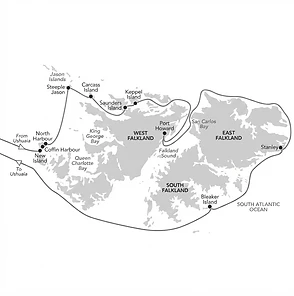
The voyage
Falklands in Focus
Flights from London→Buenos Aires / Ushuaia / New Island / Steeple Jason / Carcass Island / Saunders Island / Keppel Island / Falkland Sound / Port Howard / Stanley / Southern Falklands→Return to London
Explore further
This article was created with the assistance of artificial intelligence using publicly available voyage information. While every effort is made to keep content accurate and up to date, some details may not be 100% correct — please always confirm specifics with a travel advisor before booking.